
How do you design in Napa when deer keep eating the planting?
You design for the property and the deer together — not as an afterthought once the “pretty plants” are gone. In Napa, deer are not only a hillside problem. They move through suburban flats and backyards too — sometimes freely, sometimes loudly (buck fights included). Hillsides still carry most of the hard design pain, but suburbia is in the game.
Where the ground slopes, structure (walls, steps, paths, evergreen bones) plus planting that can live with browse pressure matter more than any single deer-resistant plant list. On flatter suburban lots, the same browse logic applies — denser masses, tough bones, honest placement of the plants deer love.
The goal is a landscape that still looks intentional after a dry summer and a hungry fall — layered enough to soften hardscape, tough enough that one browse event does not erase the design.
Deer-aware design is reasoning, not a guarantee. Every property’s browse pressure, exposure, and soil differ. The master plan is where those site facts meet a planting strategy you can live with.
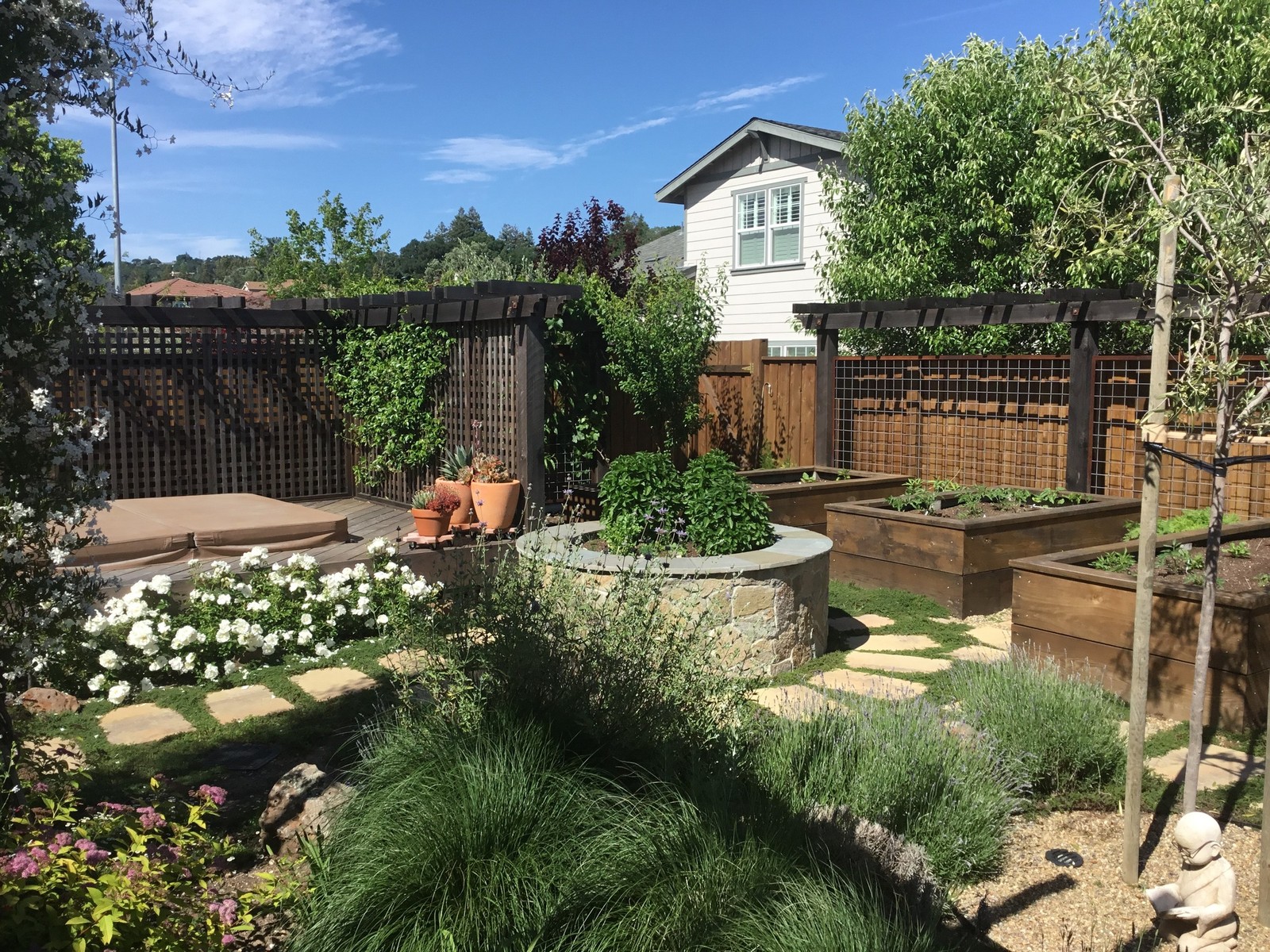
Not only the hillside
Deer pressure shows up across Napa Valley — open hillsides and edges most of all, but also suburban streets a little outside downtown cores where deer walk the flats and sample backyards. Roughly speaking, hillsides are where most of the structural failure happens (bare banks, walls without planting, endless replacements). Suburbia still loses plants; it just fails differently.
We are not dropping a thin “deer” page into every city hub. This guide stays Napa-wide and citeable. City pages can deep-link here when deer is a local talking point — the guide itself should not pretend deer only live on slopes.
Hillside first when the ground drops, plant palette second either way
On slopes, start with how the hill holds: grades, retaining if needed, steps that feel inevitable, and planting masses that settle the hardscape into the land. Treating deer as the only problem usually produces a thin palette and a still-unresolved slope.
Softening the hardscape is one of the Hall Method lines for a reason. A stone wall without planting reads as construction. Planting without structure washes out on a slope. The design has to do both.
Also design the view from inside the house. A bank or backyard you stare at from the kitchen every morning should still read as landscape after deer sample the edges — not a patch of survivors and bare soil.
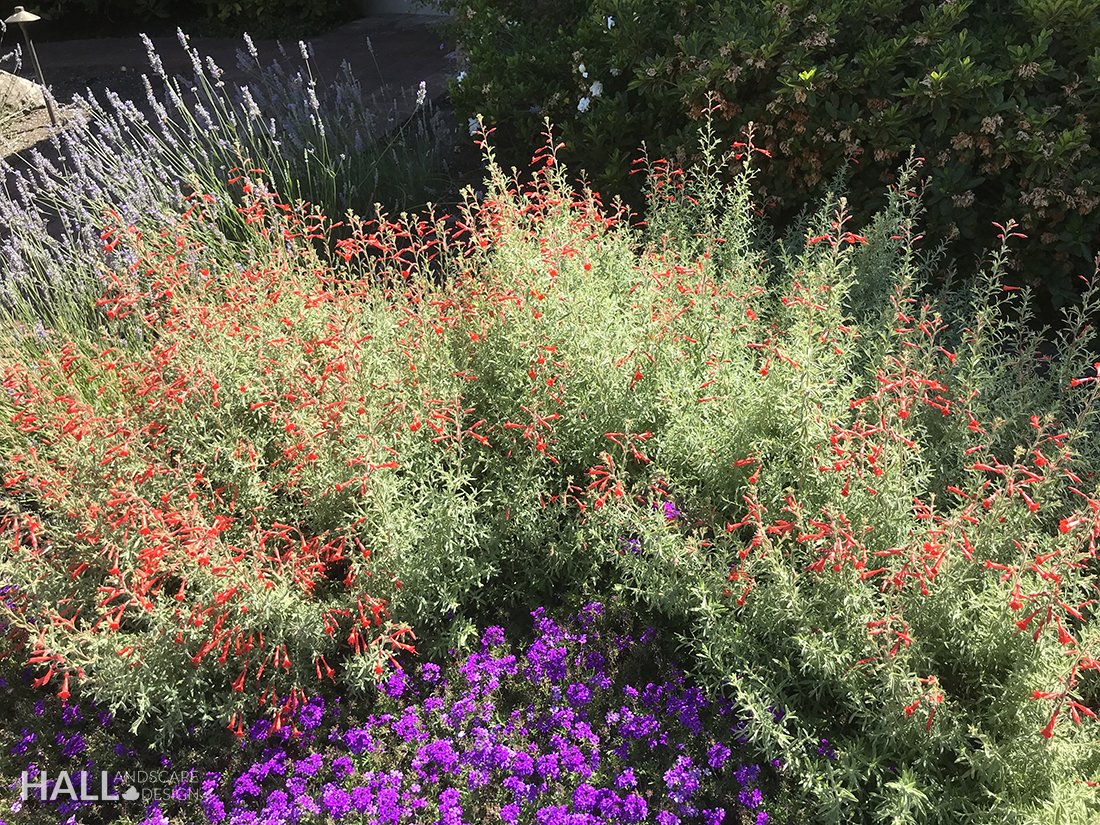
What “deer-aware” means in practice
It means favoring plants and layouts that still read as a landscape when deer sample the edges — denser masses, plants with texture and form that hold after a nibble, and enough evergreen structure that winter does not look empty. It also means placing the most tempting plants where browse is less constant, and accepting that no palette is browse-proof every season.
It does not mean promising a forever-safe plant list copied from the internet. Lists help as a starting filter. They do not replace site judgment: south-facing heat, north-facing shade, oak drip lines, wind, and how close the hillside sits to a deer corridor.
Irrigation and hydrozones matter here too. A thirsty accent bed on a dry bank invites stress, then replacement, then the next round of deer damage. Water-wise structure and browse-tough bones belong in the same plan.
Avoiding the patchwork hillside
A common failure mode: replace whatever the deer ate, year after year, without fixing grades, irrigation logic, or the outdoor rooms that make the hillside worth walking. That is patchwork on a slope — expensive maintenance without a finished feeling.
A design-first pass asks what the hillside is for (view, path, planting bank, seating) before the next round of replacements. When the structure is right, plant swaps later are refinements, not restarts.
When to get eyes on the site
If your Napa property keeps losing planting — hillside bank or suburban backyard — walk it with a designer before the next nursery run. The on-site consultation is a $300 working session — credited toward design if you proceed — focused on structure, sequence, and planting strategy that can hold under real browse pressure.
Next step
Book your $300 consultation
An on-site working session on your property — credited toward design if you proceed.