
How do you make a xeriscape look lush instead of like gravel and cactus?
Xeriscaping is a water-conserving landscape method, not a style. It rests on seven principles: plan and design, improve the soil, keep lawn only where it's used, group plants by water need, irrigate efficiently, mulch, and maintain (Denver Water; UC ANR).
Done right, it isn't gravel and cactus. UC Master Gardeners call that look "zero-scape" and describe xeriscape as "water-wise, climate-appropriate gardening."
In the North Bay the plants change with exposure: hot inland valleys, marine-influenced Marin and southern Sonoma, slopes, and the native oaks you design around. So a xeriscape here starts with one design for the whole property, then gets built in phases.
What is xeriscaping, and how is it different from "drought-tolerant"?
Drought-tolerant describes a plant; xeriscape describes a whole design method: soil, layout, lawn, irrigation, mulch and care.
Denver Water coined the word in 1981, joining "landscape" with the Greek xeros, meaning dry. Denver Water says it coined the word "to help make water-efficient landscaping an easily recognized concept" — a name for a method, not a look.
That difference matters on the ground. A yard full of drought-tolerant plants on overhead spray, with no plan behind it, isn't a xeriscape. It's patchwork with tougher plants.
And it isn't a gravel yard. UC ANR puts it bluntly: xeriscape "is NOT ZERO-scape." The Glenn County Master Gardeners go further: "Crushed gravel from the street to the front door is not California xeriscape." Gravel and a few survivors is the failure mode, not the goal.
In one sentence: a xeriscape is outdoor living designed around the water your site actually gets, so it stays generous in August without a fight.
The seven principles, read for a North Bay lot
Xeriscaping rests on seven principles, and for California, UC ranks efficient irrigation first.
Here they are in the familiar order. UC ANR's California version ranks efficient irrigation first, and says why: "Plant selection, maintenance, and other strategies alone do not save water. It's irrigation scheduling—how often and how much water is applied—that results in water savings." Keep that in mind as you read.
- Plan and design. Start with the whole property and the view from inside the house. Decide where you live outdoors, then where water is earned. This is where patchwork is stopped before it starts. (See how our process works.)
- Improve the soil. Most North Bay lots sit on clay, often compacted by construction. Plants establish faster in loosened, amended soil. For landscapes covered by the state's water ordinance (MWELO), friable soil is a stated requirement; that's context, not a promise about your permit.
- Practical turf. Keep lawn where kids and dogs actually use it. Lose the strip nobody walks on. More on alternatives below.
- Right plants, grouped by water need. Plants that drink the same go on the same valve. The water side of water-wise design covers hydrozones in detail.
- Efficient irrigation. Drip for most planting, and a controller that follows the weather. The numbers are in the drought guide.
- Mulch. A thick organic layer holds moisture and suppresses weeds. Near the house, choose it with fire in mind: Marin Water's lawn-replacement page notes that FireSAFE Marin strongly discourages shredded redwood or cedar bark ("gorilla hair"). See fire-wise planting structure.
- Maintain. Lower maintenance, not no maintenance. New plants need establishment watering, and the controller needs seasonal changes.
Rain belongs in the plan too. Keeping winter rain on the property is covered in the drought guide; where water moves across grades and hardscape, see drainage and hardscape planning.
How do you make a xeriscape look lush, not barren?
A xeriscape looks lush when the design does the work: evergreen structure, plants massed in drifts, and paths and patios that read as rooms.
These are the moves we make on front and back yards alike:
- Backbone first. Evergreen shrubs give the garden shape all year. Seasonal color goes in after, as a layer, not as the whole idea.
- Drifts, not polka dots. One plant here, one there, with rock between, reads as empty. Mass them. A good rule is planting that covers at least half the ground at maturity. Napa's and Solano County Water Agency's lawn-conversion programs both require that 50 percent cover, which tells you it's the floor, not the goal.
- Hardscape as rooms. Permeable paths and a small patio give the garden a purpose. Gravel is for paths and accents, not wall to wall. Then soften every edge with planting so it looks like it was always meant to be there.
- A clear line to the door. In the front yard, keep an obvious route from the sidewalk to the entry. Screen the windows without hiding the house.
- Design the view from inside. If the kitchen window looks at the side yard, the side yard gets designed.
Practical lawn. If you need grass for kids or a dog, keep a usable patch and make it earn its water. When clients want something walkable, these are our go-tos:
- Kurapia. A walkable groundcover we use in place of a lawn. UC Marin Master Gardeners include it on their lawn-alternatives list.
- UC Verde buffalo grass. Reads like a soft, loose lawn. UC Marin Master Gardeners note it needs mowing only about once a year.
- Dymondia. A low, silver-green groundcover we tuck between pavers. In UC Davis irrigation trials it did well on low water, and UC Master Gardeners rate its foot-traffic tolerance as moderate. Steppers take the daily walking; the Dymondia softens the joints.
- RTF sod. For the client who truly wants real grass. It's still a lawn, not xeriscape planting, so it gets the patch where people play, not the whole yard. Its grower association says a New Mexico State University trial found it kept high turf quality with 30% less water.
UC Marin Master Gardeners' list has more options, including white clover, Catlin sedge, creeping thyme and red fescue.
HOA? California law says HOA architectural guidelines can't prohibit low-water plants as a group (Civil Code §§4100 and 4735, cited in the state water ordinance). That's a fact, not legal advice; read your own CC&Rs.
What to skip: wall-to-wall rock, plastic sheeting under it, and artificial turf. None of the turf-replacement programs we checked in Napa, Marin or Solano pay for artificial turf.
Which plants work in North Bay microclimates?
In the North Bay, a xeriscape plant palette should change with exposure: hot inland valleys, marine-influenced Marin and southern Sonoma, and slopes each call for different plants, and native oaks call for planting around them, not under them.
We pick plants last, after the rooms and the feeling are settled. Then the question isn't "what's drought-tolerant?" It's "what holds this spot, this exposure, this view?"
Our picks. These are plants we use and photograph ourselves. Each one is rated Low water on our plant list for WUCOLS Region 1, the North-Central Coastal region that covers Napa and Sonoma. The list is built from WUCOLS V (UC Davis), with a few cultivars matched to their closest WUCOLS entry. Marin Water also places Marin in Region 1.
| Where | Our picks | Why we reach for them |
|---|---|---|
Hot inland valleys and reflected heat (Napa Valley floor, Sonoma Valley) 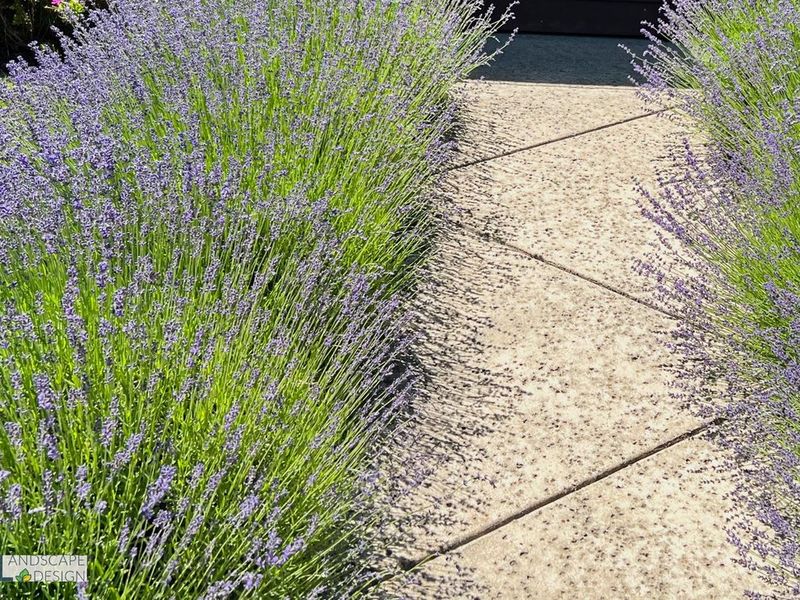 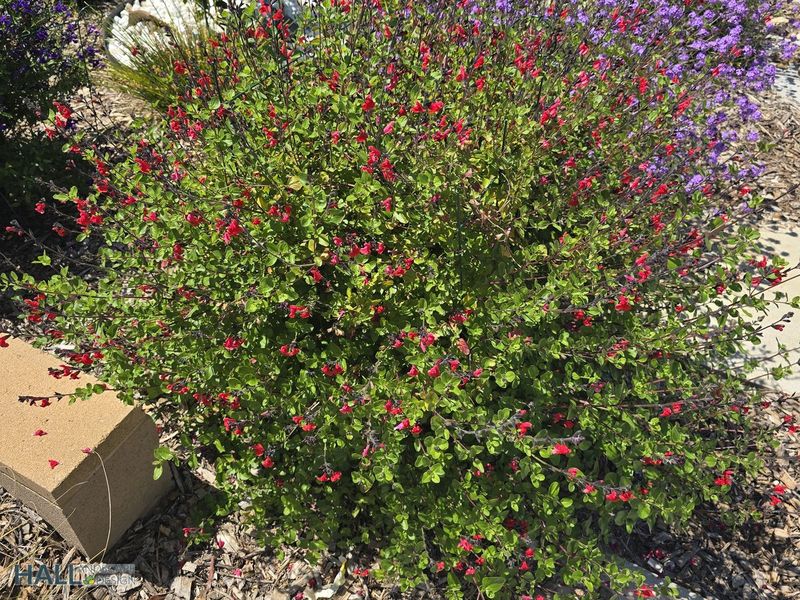 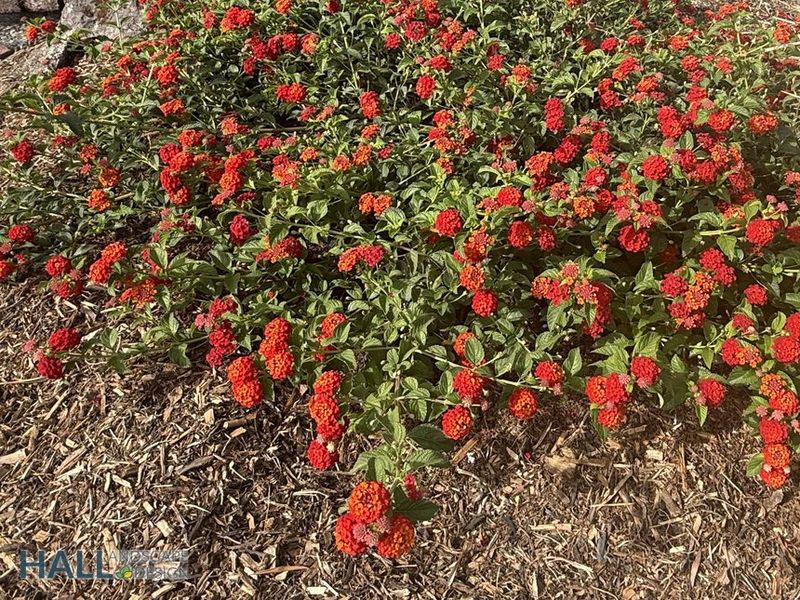 | Provence lavender (Lavandula × intermedia 'Provence'), autumn sage (Salvia greggii), Dallas Red lantana (Lantana camara 'Dallas Red') | This is the planting for the bed by the driveway, the south wall and the front walk, where the wrong plant cooks. We line the walk or mass it in drifts so the front reads as one sweep from the window, not a sampler. |
Near the fog (southern Marin, the Petaluma side, the Sonoma coast side) 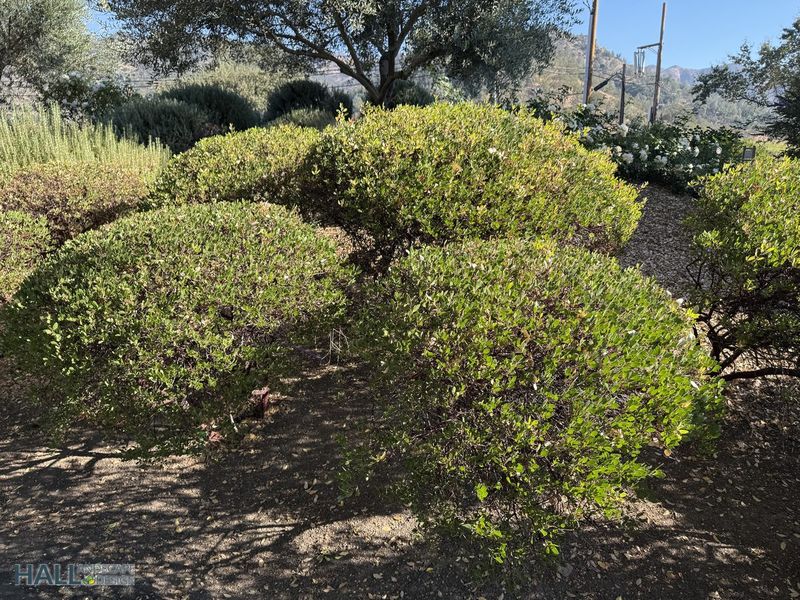 | Howard McMinn manzanita (Arctostaphylos densiflora 'Howard McMinn') | The evergreen backbone. It holds the shape of the garden all year, so the seasonal layer can come and go around it. |
Grasses, in sun 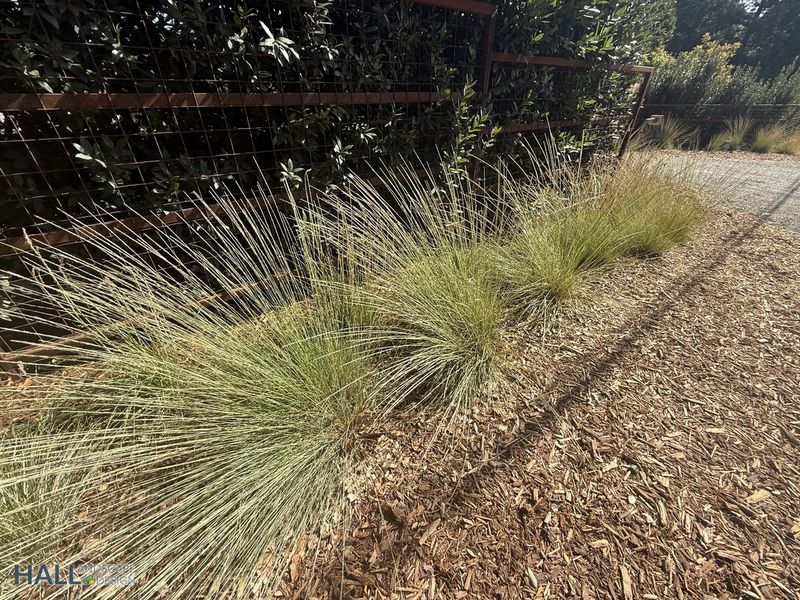 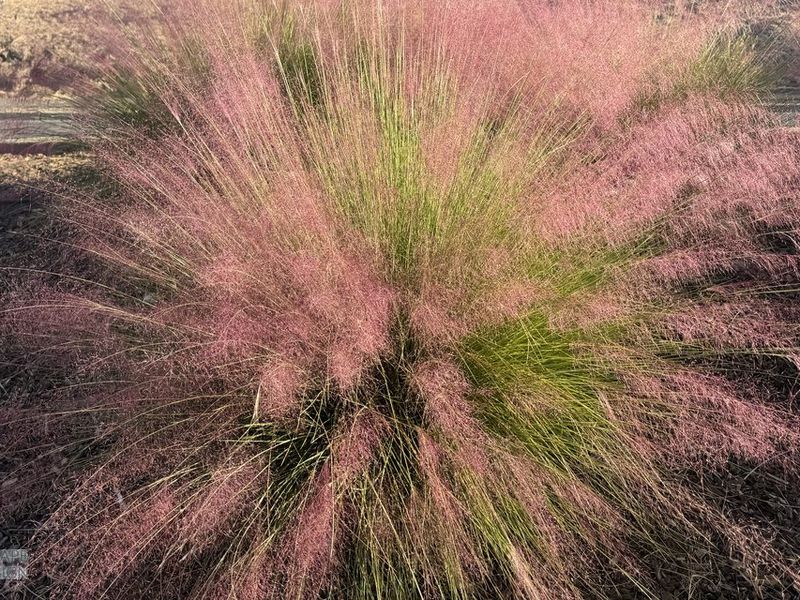 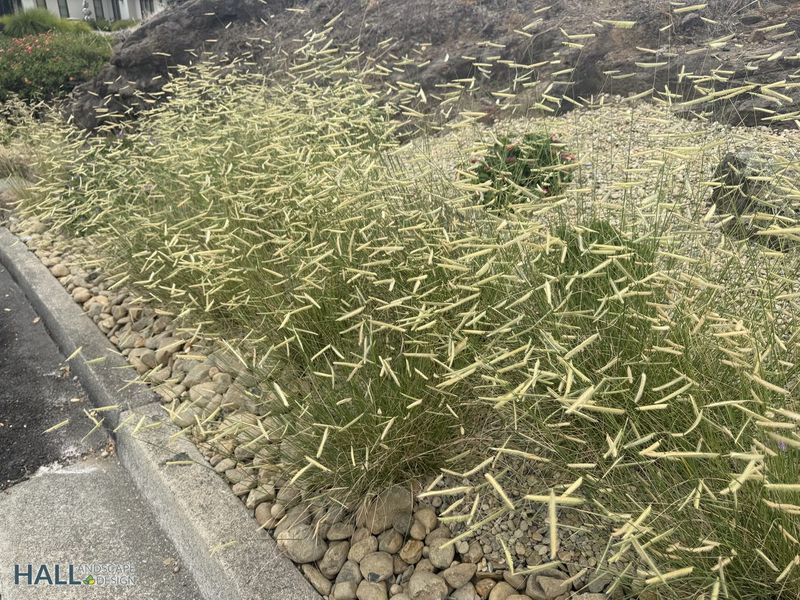 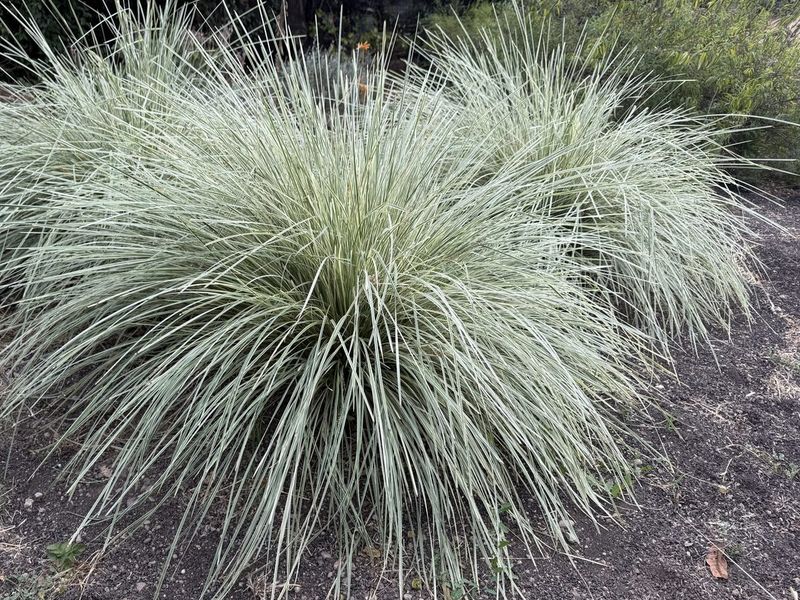 | Deer grass (Muhlenbergia rigens), pink muhly (Muhlenbergia capillaris), Blonde Ambition blue grama (Bouteloua gracilis 'Blonde Ambition'), Platinum Beauty mat rush (Lomandra longifolia 'Platinum Beauty') | Grasses bring the movement. We use them to soften the edge of a patio or path so the hardscape settles in. |
Seasonal color, in sun 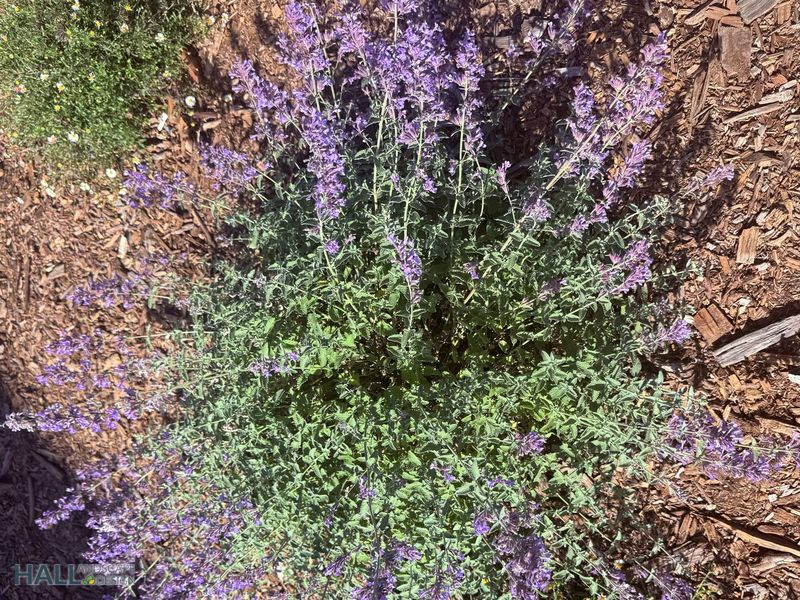 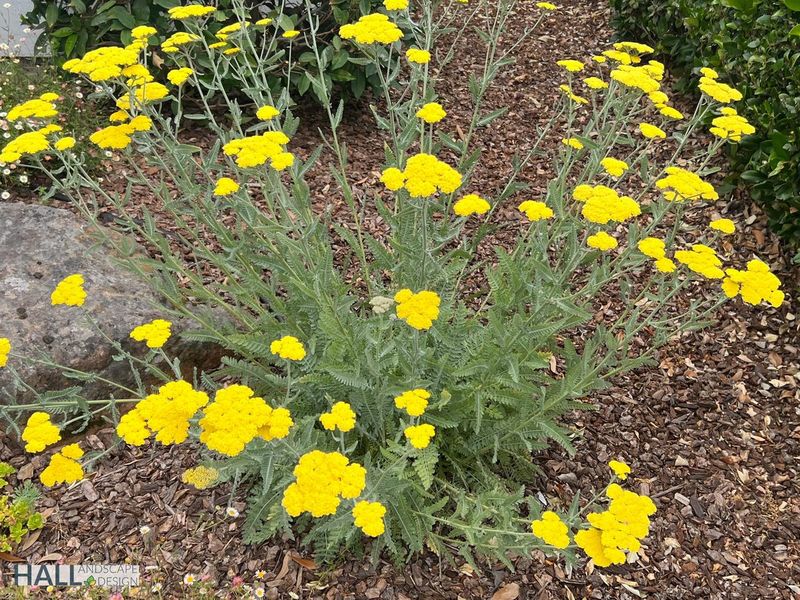 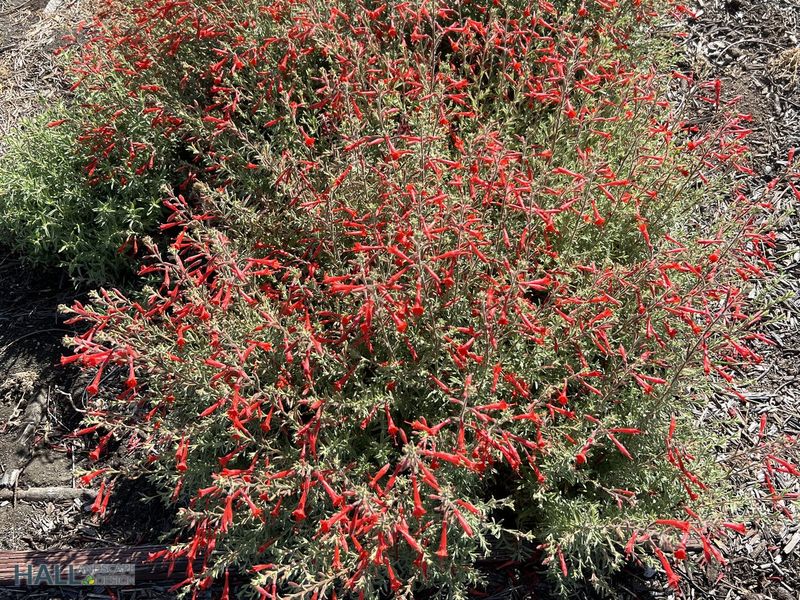 | Walker's Low catmint (Nepeta × faassenii 'Walker's Low'), Moonshine yarrow (Achillea 'Moonshine'), California fuchsia (Epilobium canum) | The layer that changes through the year, planted in repeats so the color reads as intent, not leftovers. |
Between steppers and at bed edges 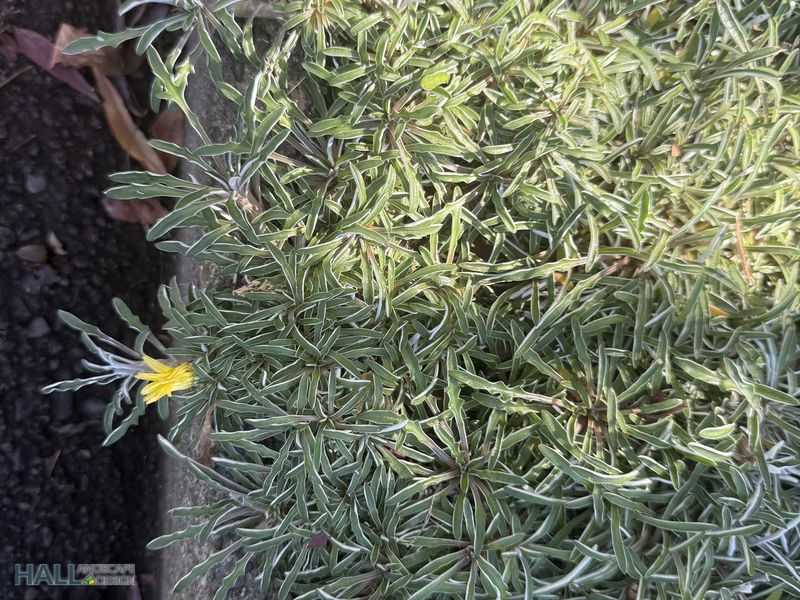 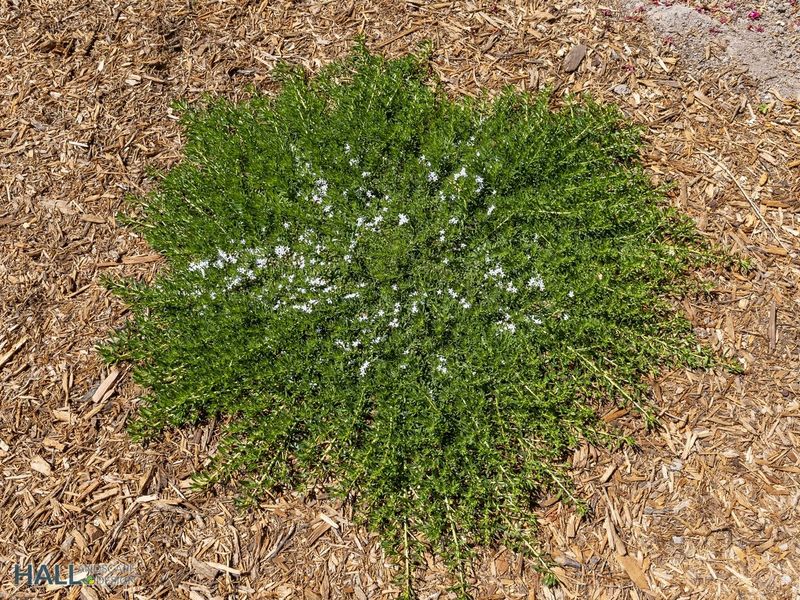 | Dymondia (Dymondia margaretae), creeping myoporum (Myoporum parvifolium) | Dymondia fills the joints between steppers; creeping myoporum spreads along bed edges. Both keep bare soil from showing. |
Dry shade (north sides, under eaves and structures, beside buildings) 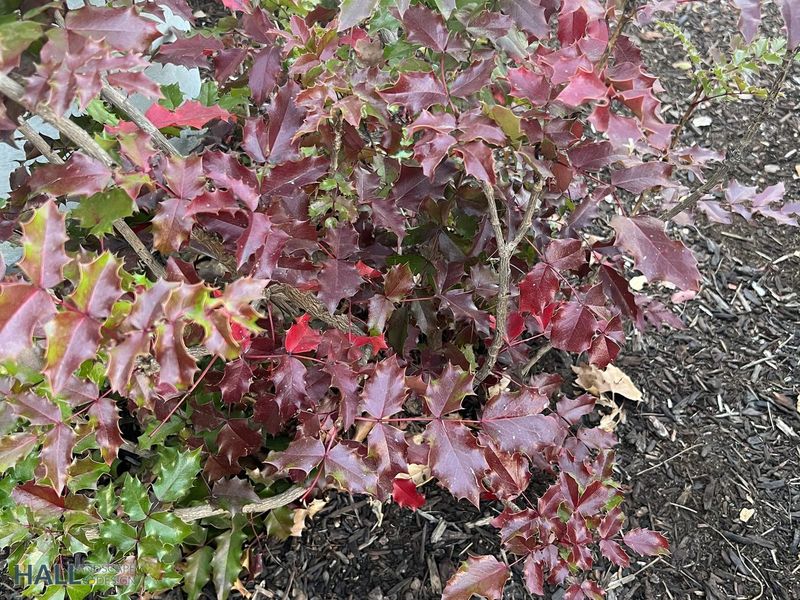 | Orange Flame Oregon grape (Mahonia aquifolium 'Orange Flame') | For the shady side of the house, on little summer water. Not under an oak: see below. |
Work around the oak. Our rule is simple: never plant under a native oak. No summer water in the root zone. Leave the leaf litter, or mulch, and don't irrigate. The planting and the drip lines start out past the canopy's edge, and the oak stays the anchor of the view. UC guidance backs the water side: "Ideally, the soil in the root zone of the oaks should not be irrigated during the summer," and roots within ten feet of the trunk are "particularly sensitive to root rot." That root zone reaches well past the canopy — one UC Cooperative Extension note puts it at "2-4 times the distance from trunk to branch tips" — so the farther out the water goes, the better. UC Master Gardeners in San Luis Obispo County also say to "allow oak leaf litter to remain undisturbed." Our drought guide shows how we kept a lawn conversion's new planting out from under an oak's drip line.
Slopes. On the UC Sonoma list, manzanita, ceanothus, coffeeberry and toyon are all flagged for erosion control. Planting is design work. If a slope needs grading or a drainage plan, we refer you to a licensed landscape architect we work with, who prepares it under their own license and their own agreement with you. If the site needs engineering, a licensed civil engineer may be involved. See planting and access on steep lots.
Deer. Many of these plants are rated deer-resistant on the UC Sonoma list. Resistant, not proof. See deer pressure.
Look it up yourself: CNPS's Calscape finds natives by address. The Napa Valley Water Wise Landscaping site has detailed descriptions, including water needs, for more than 600 plants. The Sonoma RCD keeps drought resources.
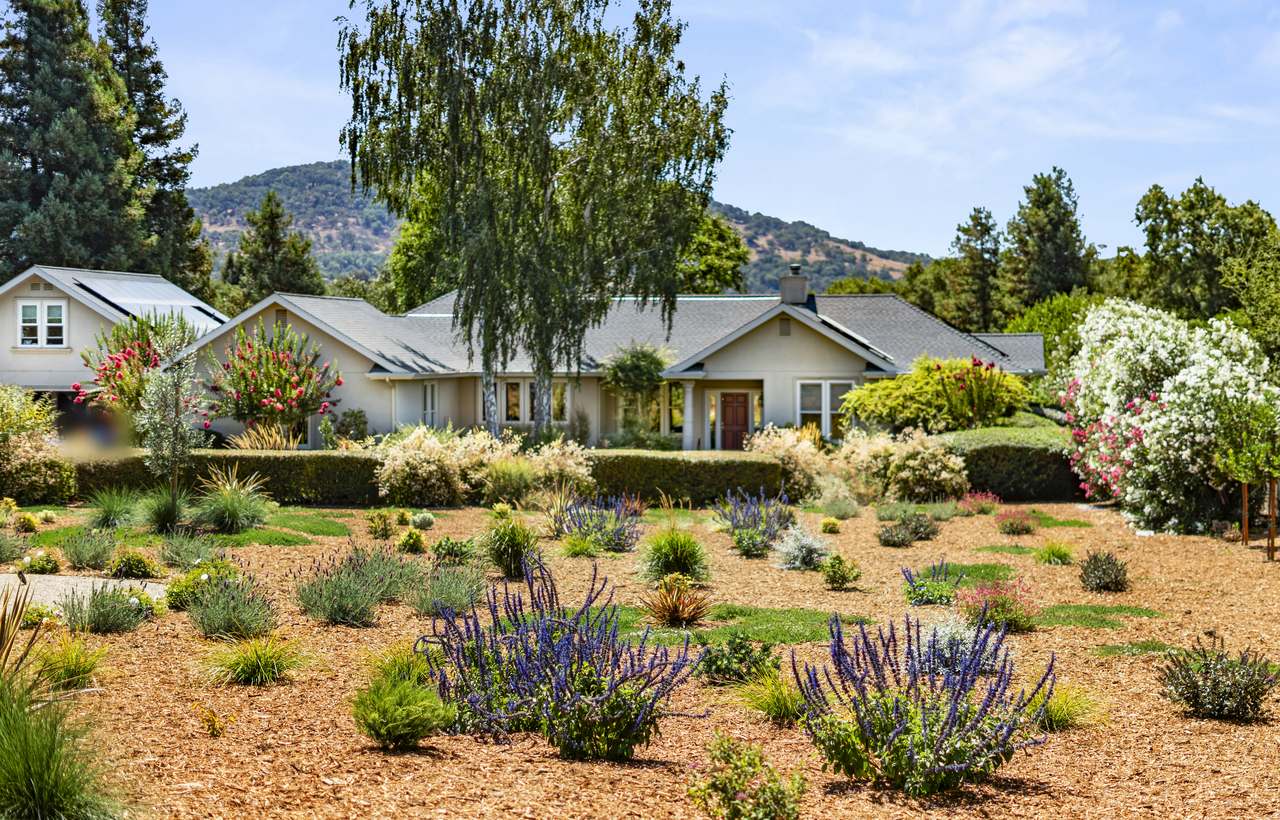
One North Bay front yard. The photo at the top of this page is one of ours, an inland front yard. It's meant to be seen from the windows as much as from the street. A clipped hedge frames the front of the house. Out front, the planting comes in drifts: purple flowers repeated across the bed, grasses for movement, low gray shrubs to hold it together. Bark mulch covers the ground between them. The same few plants repeat, so the bed reads as one piece even while it fills in. The wooded hills behind do the rest. It reads as one composition, and it looks like it was always meant to be there.
How do you phase a xeriscape, and can you do parts yourself?
Yes: start with one design for the whole property, then build it in phases or do parts yourself.
You keep the design set forever. You get about a week to review it before our next meeting. Then you can phase it in: the front lawn conversion this year, the back-yard rooms next, some of it yourself, contractors for the rest. What we deliver are detailed designs your contractor can build from, so each phase fits the last instead of becoming patchwork.
The DIY-friendly step is sheet mulching. Marin Water and the Solano County Water Agency both encourage it, and Petaluma's Mulch Madness program provides free sheet-mulch supplies to eligible customers. Marin Water also notes that small plants (4-inch or 1-gallon) cost less and establish faster.
Rebate timing shapes the phases. Each rebate program we verified (Napa, Marin Water and the Solano County Water Agency) requires approval before the lawn comes out, then sets a deadline to finish: Napa, a post-inspection within 8 months of the notice to proceed (plus 4 with sheet mulching); Marin Water, 180 days; Solano County Water Agency, 120 days. Treat the lawn as one phase. For amounts, see the drought guide, and check the current program before you dig (terms as of Oct 17, 2026).
Plant in fall, so winter rain does most of the establishment work. New plants still need watering until they're established, even the tough ones.
What does a xeriscape cost, and is it worth it?
The cost depends on a handful of design decisions, so the honest answer is a list of drivers, not a price per square foot.
- How much lawn comes out, and how (sheet mulch or sod removal).
- Converting irrigation to drip, and how many zones.
- Soil prep on clay or compacted ground.
- How much is hardscape versus planting.
- Plant size: smaller plants cost less and often catch up.
- Slope, and whether the site needs a grading or drainage plan (a referral to a licensed landscape architect we work with).
- How many phases you build in.
Is it worth it? The honest case is less maintenance, lower outdoor water use, and a better garden you actually use. We won't promise a savings percentage or a bump in home value.
What this guide is not
Not a plant encyclopedia, a rebate guarantee or a code manual. Programs pause and change, so confirm terms with your water provider before you remove anything. We are a landscape design firm and don't prepare grading or drainage plans. When a project needs one, we refer you to a licensed landscape architect we work with, who prepares it under their own license and their own agreement with you. Sources checked Oct 17, 2026.
How to proceed
If you want a low-water yard that still feels generous, start with an on-site working session, not a lawn-removal bid. The consultation is a $100 session with Ian at Hall Landscape Design, credited toward design if you proceed. We'll walk the site, look from inside the house out, and sort what earns water, what to keep, and what to do first.
Hall Landscape Design · 222 Soscol Avenue, Napa, CA 94559 · (707) 227-4931 · halldesign.info
Sources
Official pages behind the rules and figures above, checked Oct 18, 2026.
- Denver Water, Xeriscape plans (origin of the term, 1981)
- Denver Water, Water Wise Landscape Handbook (seven principles)
- UC ANR Publication 6713 (Karlik, 2022), doi:10.3733/ucanr.6713, Principles for Landscape Water Conservation (irrigation ranked first; quoted above)
- UC Cooperative Extension / UC Master Gardeners, Green Scene (2018), Xeriscape Principles for Water Conservation
- UC Master Gardeners of Glenn County, Xeriscaping
- UC ANR, Designing with Drought-Tolerant Plants
- UC ANR Garden Notes, Drought Tolerant vs. Drought Resistant Gardens
- UC Master Gardeners, Recommended Plants for Sonoma County to Conserve Water
- UC Master Gardeners Sonoma, Garden Sense Water Smart Plant Guide
- UC Marin Master Gardeners, Lawn & Lawn Alternatives (Kurapia, UC Verde, clover, Catlin sedge, thyme, red fescue; UC Verde mowing)
- UC Cooperative Extension, Sacramento County, Environmental Horticulture Note 74, "California Native Plants Under Central Valley Native Oaks" (Lichter & Zagory) (summer root-zone irrigation, ten feet from trunk, root-zone extent)
- WUCOLS V (Water Use Classification of Landscape Species), UC Davis, Region 1 North-Central Coastal; data of Jun 27, 2025 (Low ratings for every plant pick, as matched in HLD's WELO list; some cultivars matched to the closest WUCOLS entry)
- UC Master Gardeners of San Luis Obispo County, Oaks in the Home Landscape (leaf litter)
- UC ANR Publication 21538, Living Among the Oaks: A Management Guide for Woodland Owners and Managers (McCreary, 2011; summer watering of oaks, root zone)
- UC Landscape Plant Irrigation Trials (UC Davis), Dymondia margaretae (2022; "irrigated on low water in WUCOLS Region 2")
- UC Master Gardeners of San Luis Obispo County, Lawn Alternatives: Grasses and Groundcovers (Dymondia "Tolerant of foot traffic: Moderate")
- RTF Sod (grower association site; manufacturer claim of 30% less water in an NMSU trial)
- CNPS Calscape
- Napa Valley Water Wise Landscaping plants
- Sonoma RCD, Drought Resources
- 23 CCR §490.1 (MWELO general provisions; friable soil, HOA low-water plants)
- City of Napa, Cash for Grass
- Marin Water, Cash for Grass
- Solano County Water Agency, Water-Efficient Landscape Rebate
- City of Petaluma, Mulch Madness
Next step
Book your $100 consultation
An on-site working session on your property — credited toward design if you proceed.